
One-dimensional elastic collisions.
Version 0.1 [11-16-06]
To do:
(i) Generalize to completely inelastic collisions.
(ii) Generalize to partially inelastic collisions. (f? Q?)
(iii) Add collision special effect.
(iv) Two dimensions.
m1, m2 = object masses; M – total mass; V1,V2 – object initial velocities;
Mass and velocity of second mass are defined as multiples of those of first mass.

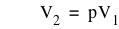


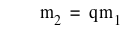

W1, W2 – final object velocities.

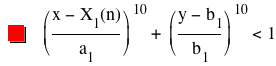
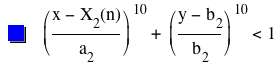
Positions of mass centers. Constructed to collide at the origin at t=0 given initial time n_initial=-2 (so x1_init = V1*n_initial and same for mass 2.) Shifts account for finite size of masses.
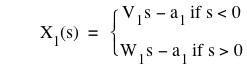
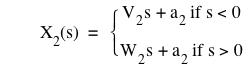
a, b – size of masses.

Masses:
Author: David A. Craig <http://web.lemoyne.edu/~craigda/>

This file was created by Graphing Calculator 3.5.
Visit Pacific Tech to download the helper application to view and edit these equations live.